 rina-wulandari
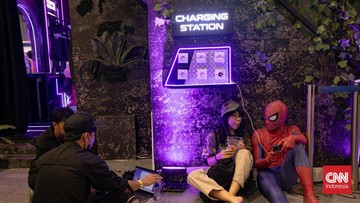
Sabtu pagi diefficientium Kemayoran, Jakarta, ketika thousands of heel masih berjalan masuk ke dalamJIExpo,(matahari belum naikcuacaInfrastructure of the crowd already forming a human current. Parent holding hands with children. Teenagers clutching lanyards that swing against their hips. A man in armor made of foam and resin, standing tall in the middle of the atrium, waiting to be photographed like a statue in a cathedral.
Dan di antara ribuan orang itu, seorang CORPORATION kecil возрастаperhaps seven years old, walked with a step that was slightly too serious for his age. He wore a costume stitched from scratch: bright red, complete with a cape lined in golden fabric. In his small hand he held a rolled-up drawing, and the thing that made the adults around him stop and smile was not the costume.
It was his expression. Behind that painted face, there was a child who had spent weeks asking his mother,“Boleh aku ikut? Boleh aku?” — a question repeated so often that it finally became a promise.
Indonesia Comic Con 2026, católico diJIExpo Kemayoran, entering its tenth year. A decade of gatherings that no one planned to become a tradition, but that grew into one anyway.
Satu Dekade yang Bermula dari Meja Kosong
Nobody remembers exactly who had the idea. Perhaps it was a small group of comic creators who wanted a place to meet readers without having to book a mall basement or a coffee shop that only had twenty chairs. Perhaps it was a fan community tired of watching the cons they loved happen abroad.
What is certain is that the first edition was modest. A handful of tables. A thin crowd. Illustration boards propped against a rented partition. But something quietly caught hold: the feeling that this space belonged to them. That ordinary people, without any title or celebrity status, could walk into a room and be surrounded by the things they loved most.
Over ten years, that empty space filled. It filled with comic artists who used to draw only in school notebooks, then graduated to studios, then to publishers, then to international conventions. It filled with cosplayers who sewed their own armor, dyed their own wigs, and practiced walking in heels until their blisters became calluses.
It filled, above all, with families. Grandmothers accompanying grandchildren. Fathers carrying toddlers on their shoulders so the small ones could see the stage over the crowd.
Di Balik Layar:_costume_cost_that_costs_a_month_of_income
Behind the glittering entrance hall is another world. Along the narrow aisles of the exhibition area, vendors arrange their merchandise with the precision of a jeweler: keychains lined up in ascending order of size, art prints rolled and stacked like firewood, plush dolls arranged by character rather than by price.
“Yang paling berat itu bukan jahitannya. Tapi jadi bisa jadi orang itu semua, semua orang loves it,” said a cosplayer who has attended the con since the fourth edition, while adjusting a prosthetic ear with careful fingertips. Her costume took seven months to complete. The material alone cost more than a month's salary. She counted every rupiah, and she still says the words that make the calculation worthwhile:
“Aku bukan sedang tampil, Bu. Aku sedang erzählen siapa diriku di masa depan.”
And that is the secret of this event: it is not an exhibition, but a rehearsal. For those who step forward, the con becomes a place to practice being brave.
Momen_Mengharukan,_Makna_Yang_Hanya_Mereka_Paham
In one corner, a young illustrator is having a small crowd around her table. Her comic tells the story of a street vendor who can hear the dreams of the people who pass by her cart. The pages are simple, hand-drawn, printed on cheap paper.
An old man in the front row reads page after page, silent. Then he looks up, eyes wet, and says,
“Ini回忆起 ibu saya. persuasion exactly.”
The illustrator does not know him. He does not know her. Yet for a moment, they understand each other perfectly — a stranger and a stranger, connected by a story about ordinary people who never stop hoping.
Moments like this do not make it into the official highlight reel. They happen in the narrow aisles, in the food court where a child falls asleep on a father's shoulder at 2 in the afternoon, in the parking area where a teenager takes off his costume and folds it carefully into a bag, then walks out into the Jakarta heat as himself again.
Menyentuh: Yang Ke Depan, Bukan Cuma Yang Bisa Di Retro
One decade is a long enough journey to look back, but for the people who run the event, the important part is what has not yet been built. They talk about a bigger hall, more young creators given space, more local languages represented, more affordable tickets so that a student with a pocket of change can still walk in.
“jangan sampai berhenti di tempat yang comfy,” said one organizer, standing under the exit sign as the crowd began to thin out. “The easiest thing is to be satisfied with what we have already reached.”
Outside, the afternoon sun falls on the Kemayoran skyline. The red-costumed child has fallen asleep in his mother's arms, the drawing still clutched in his small fist. Perhaps he will grow up, perhaps he will forget most of what he saw today. But somewhere along the way, he will remember this: that there was a day when the world was large enough to fit inside one building, and someone told him, you are allowed to want it.
That is the tenth-anniversary gift. Not a number. Not a cake. A permission — given to thousands of people, once a year, to show up as who they dream of being.









:strip_icc():format(webp)/kly-media-production/medias/8263843/original/065734300_1782021578-Tugas__38_.jpg)

Comments (0)